Shooting Oshin's faucet water filter in a real bathroom, not a studio
The brief
Oshin came to us through a referral. They were selling a faucet-mounted water filter into the US market and needed two things at once: a full set of product photography, and a Shopify store built around it. That combination is why they came to one studio rather than two. Most brands in their position brief a photographer, wait for the images, then hand those images to a web developer who has never seen the product and had no input into what was shot. Every revision then crosses a gap between two vendors who have never spoken to each other.
The challenge
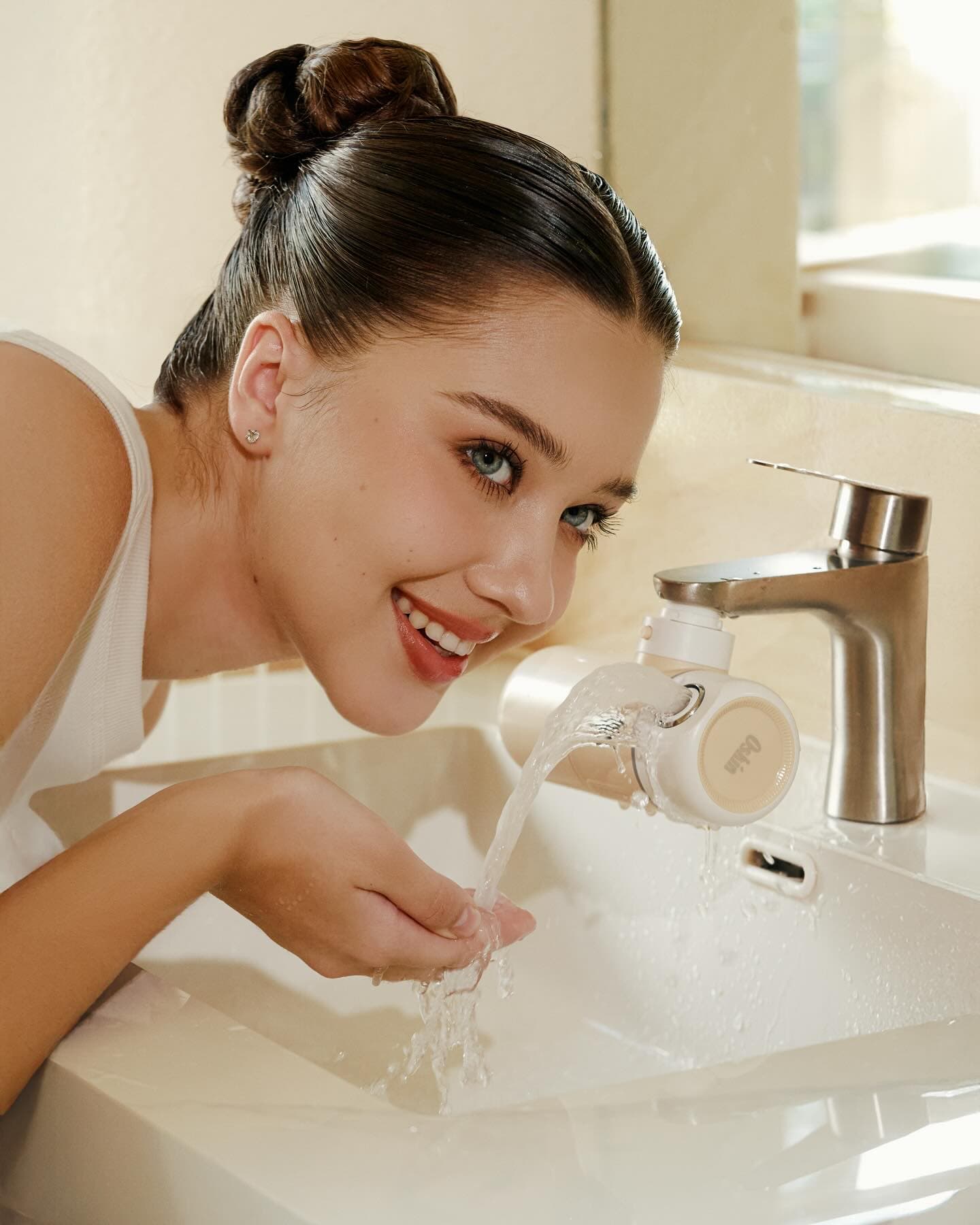
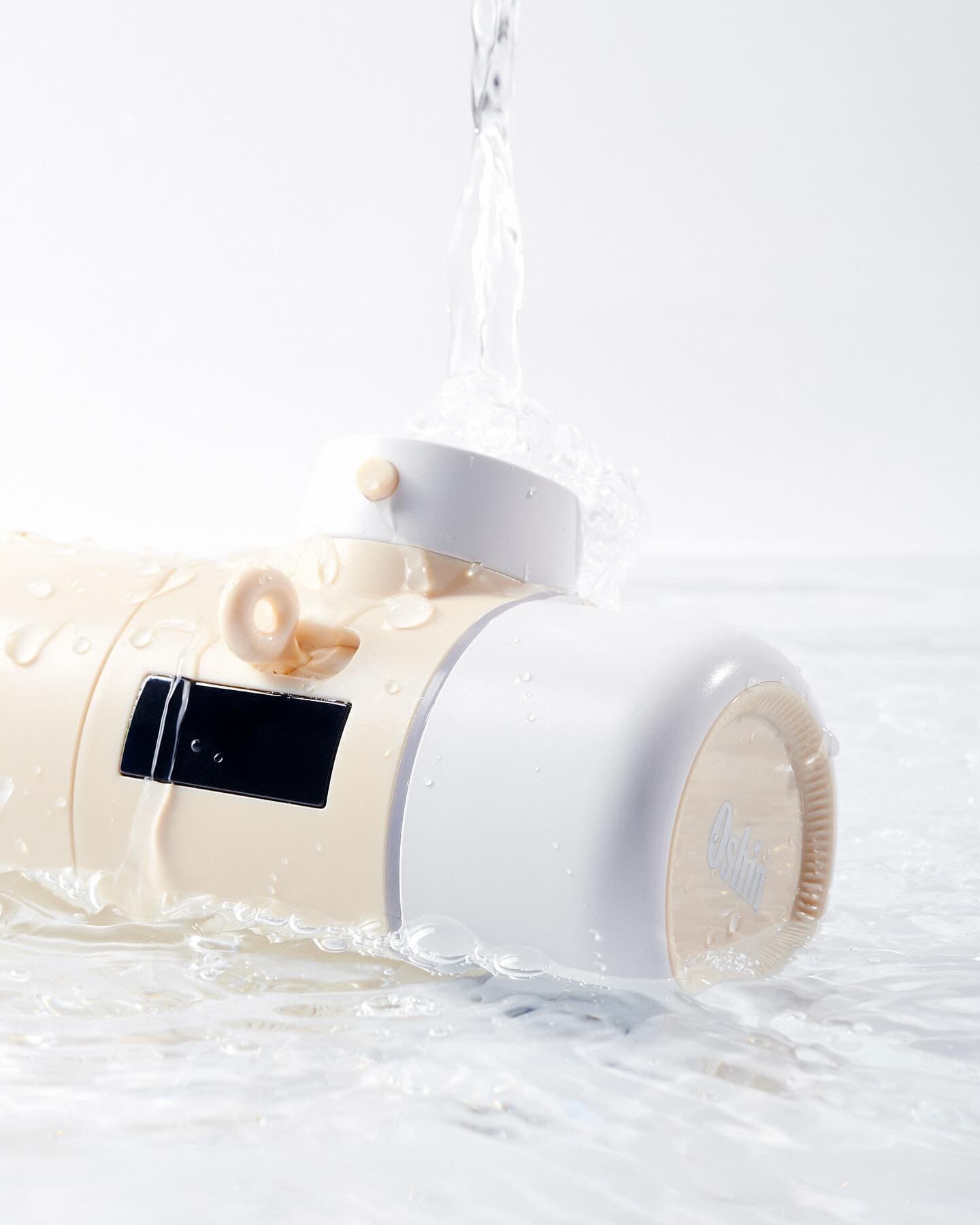
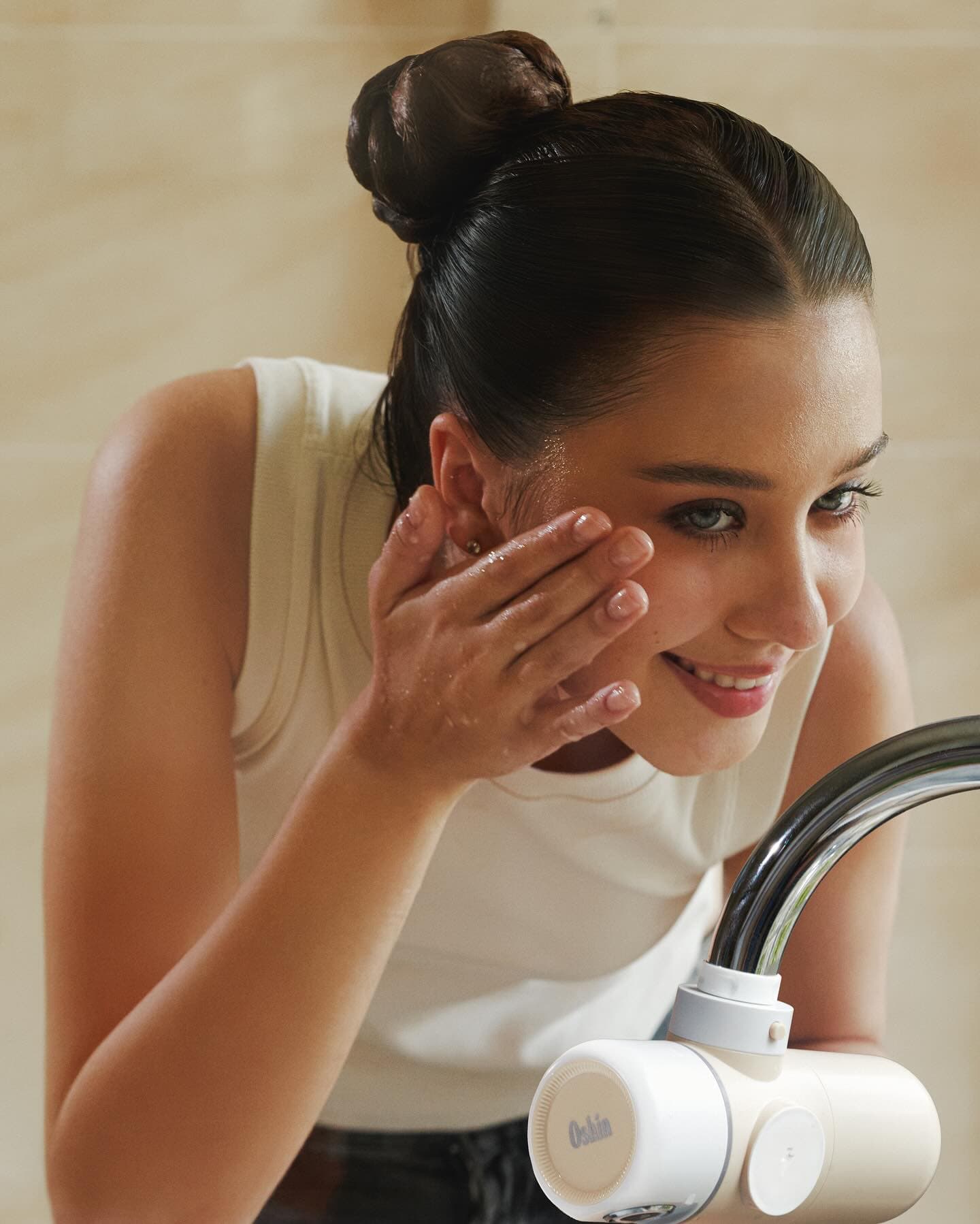
A faucet water filter is a product that only makes sense in context. Photographed alone on white, it reads as a small white cylinder. Nothing in that image tells you what it does, where it goes, or why you'd want one. The entire proposition, filtered water from the tap you already own with no plumber required, is invisible until you see the thing attached to a real faucet with water running through it. So the shoot needed a bathroom. A convincing one. The usual shortcut is a partial set: a section of countertop, a borrowed tap, a plain background dressed to suggest a room. It holds up from one fixed angle and falls apart from any other. Water is what gives it away. Water reflects the room it's in, and a room that isn't really there produces reflections that read as wrong even to viewers who couldn't say why. Running water is also simply difficult to photograph. It doesn't repeat, it doesn't hold still, and the shape of the stream is different in every frame.
Our approach
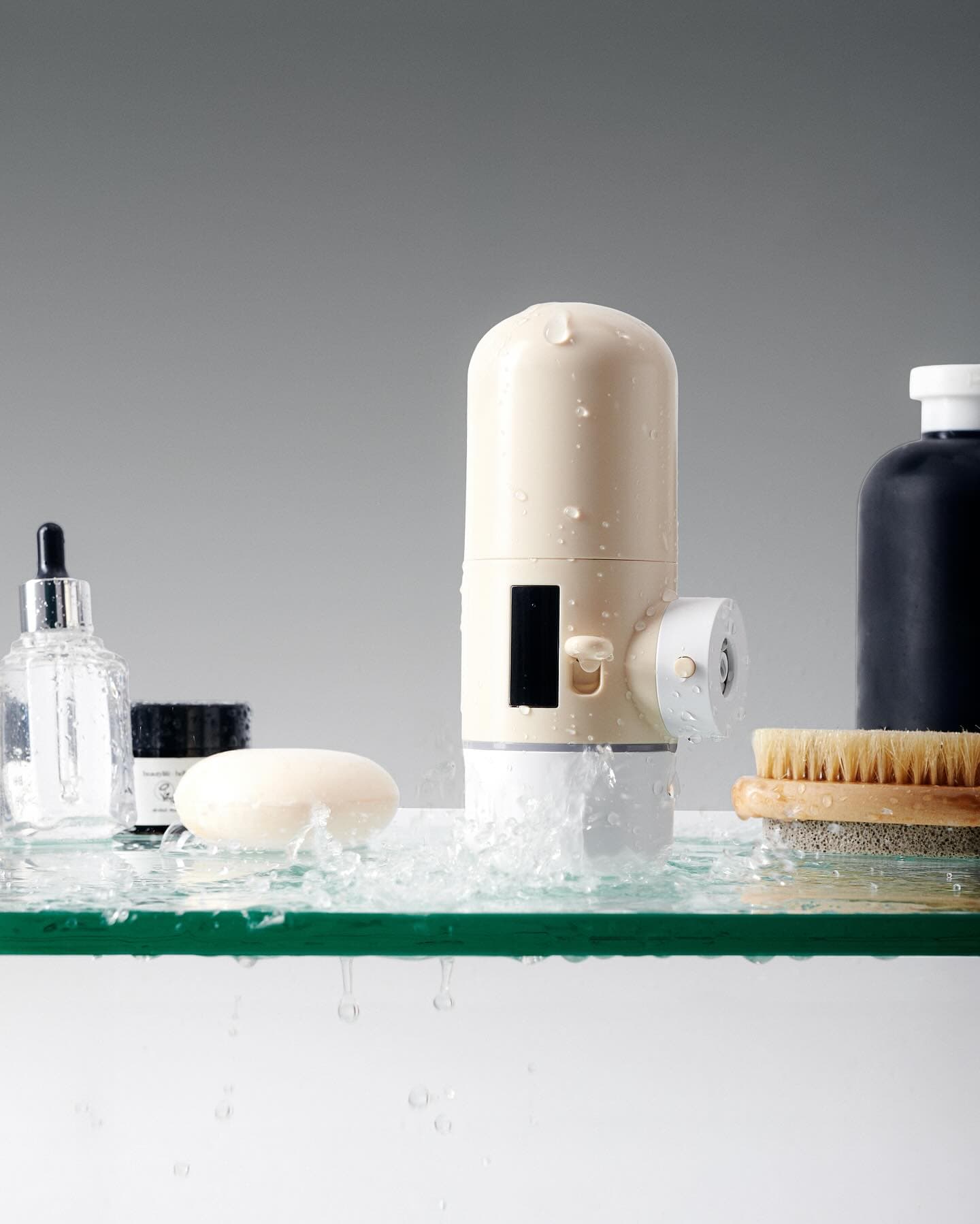
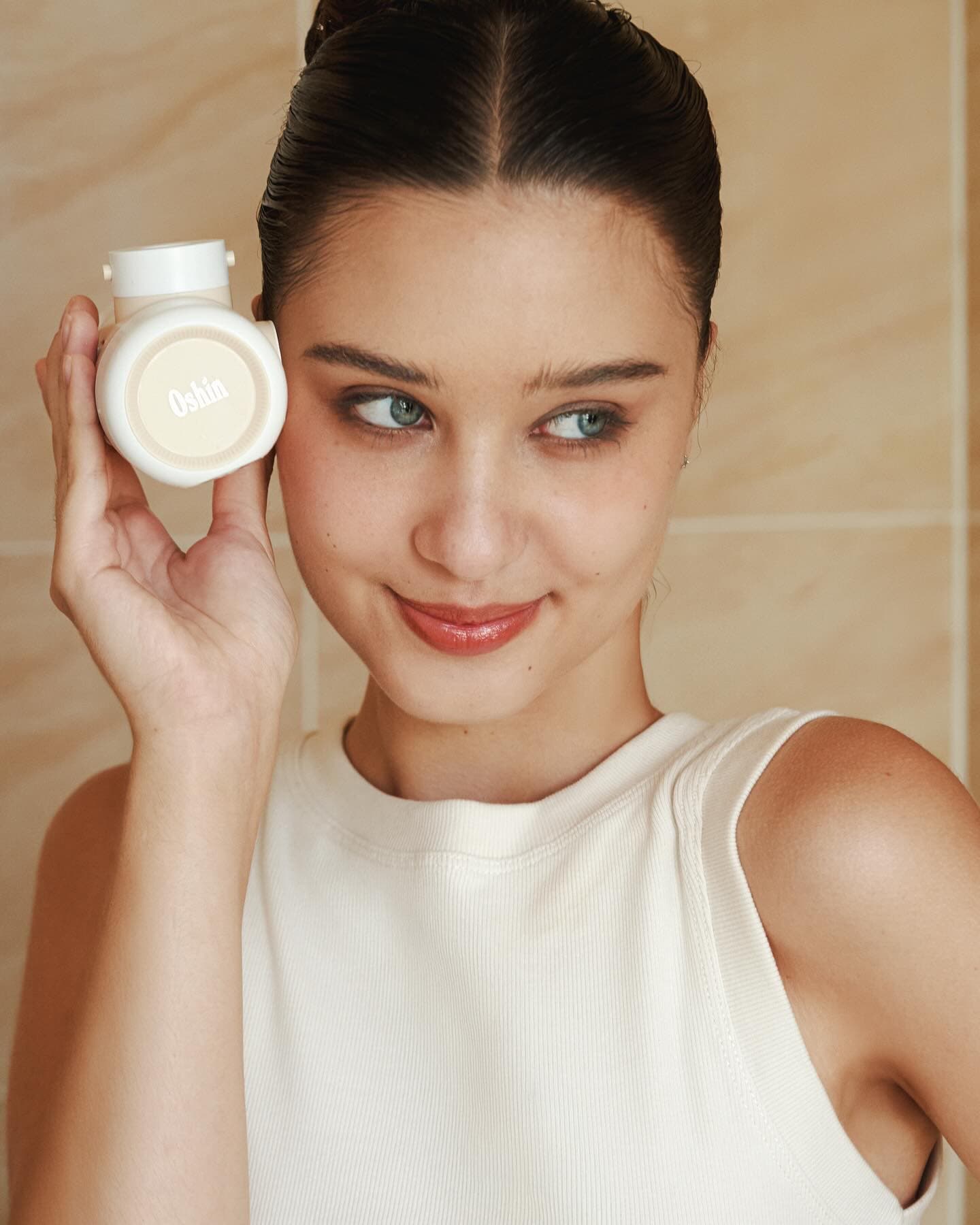
We hired a real luxury bathroom rather than building a set. This is a straightforward decision for us and an awkward one for an overseas studio. We work in Guangzhou at local production rates, so booking an actual location for a shoot day sits inside a normal project budget. A brand commissioning the same shoot from a studio in New York or London would usually be told the location was out of scope, and would end up with the partial set instead. Working in a real space changed what was possible. Daylight through an actual window gave the water something real to reflect. The countertop, mirror, tiling and fittings were genuinely there, so the camera could move freely rather than protecting the one angle that worked. And a real bathroom meant we could photograph the product being used, a model at the sink with hands under the running water, rather than sitting inert on a surface. The delivered set leans heavily toward lifestyle for that reason. The white-background images matter, they're what a marketplace listing and a spec section need, but they were never going to be the images that sold this product. The ones that do the selling are the ones showing a person using it in a room that looks like their own. Because we shot the photography and built the store, the two were planned against each other rather than in sequence. Photography and site were delivered together in three weeks.
Deliverables
- ✳ Lifestyle product photography shot on a hired luxury bathroom location in Guangzhou
- ✳ Model photography, product in use at the sink
- ✳ 4-7 white-background catalogue images
- ✳ Retouching and colour correction throughout
- ✳ Custom Shopify store, designed and built
- ✳ Full commercial usage rights
The outcome
Oshin got their photography and their store in three weeks, from one team, and were happy with the result. That's a plainer sentence than most agency case studies end on, and it's deliberate. We could quote a conversion lift here. We'd be making it up, and you'd have no way to check it, which is exactly the problem with most numbers on pages like this one. What we can point at is the work itself, further up this page. The bathroom is real, the water is real, the model is real, and the images are the ones Oshin is selling with.
Want work like this?
Send your product and the shots you need. We'll evaluate your sample and return a fixed quote within 48 hours.